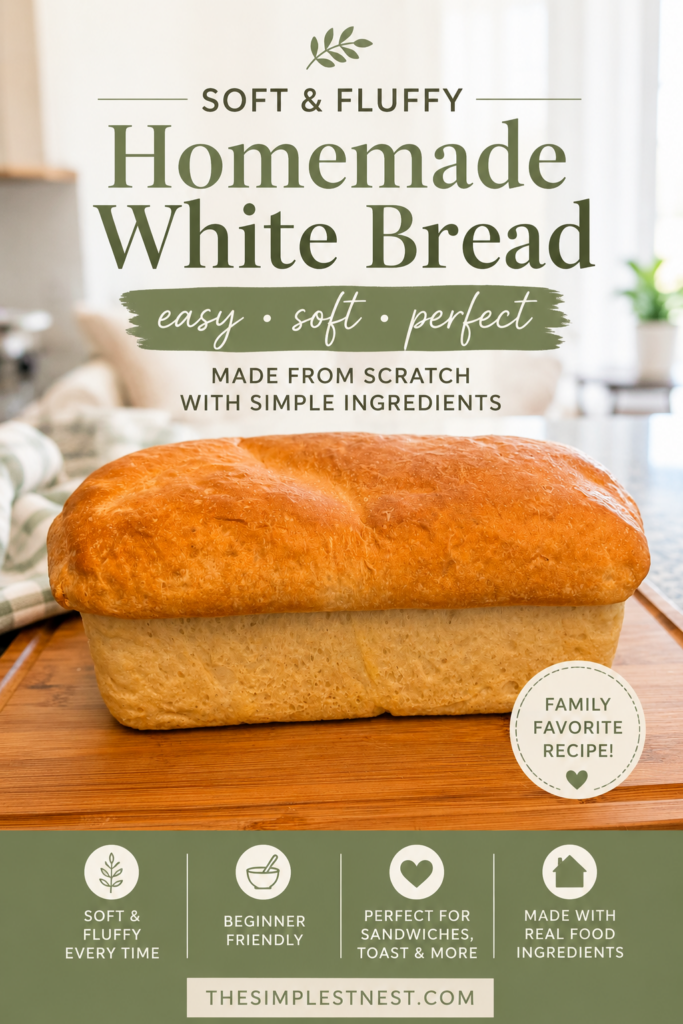
There is something about homemade bread that makes a house feel softer.
The smell, the warmth, the way it makes the kitchen feel steady and cozy — it just feels like home.
And this soft homemade sandwich bread is one of those recipes that feels comforting without feeling overwhelming.
It’s not fancy.
It’s not complicated.
It’s not the kind of bread recipe that makes you feel like you need to know every baking trick before you start.
It’s just a simple, dependable loaf of bread that works for real family life.
The kind you can slice for sandwiches, toast in the morning, turn into grilled cheese, or use for homemade Uncrustables when you want something easy to have on hand.
I love recipes like this because they make from-scratch cooking feel doable.
Not perfect.
Not stressful.
Just one small homemade staple that can make everyday meals feel a little more intentional.
Because sometimes simplifying food at home does not mean making everything harder. Sometimes it looks like learning one simple bread recipe that can support your week in a really practical way.
This bread is soft, fluffy, and easy to use for the meals your family already eats.
And that’s what makes it such a good recipe to keep in your back pocket.
It brings that homemade comfort into your kitchen without asking too much from you.
Here’s the next section in your tone, with the focus keyword worked in naturally:
Why I Love Making Simple Homemade Bread
One of the things I’ve been slowly learning in our home is that homemade does not have to mean complicated.
For a long time, I think I made from-scratch cooking feel bigger in my head than it needed to be. Like if I was going to make bread, I needed the perfect schedule, the perfect kitchen, and a whole peaceful afternoon with nothing else going on.
And honestly, that is not real life.
Real life is kids needing snacks, dishes in the sink, appointments on the calendar, laundry that keeps restarting itself, and everyone asking what there is to eat.
So for me, making simple homemade bread is not about doing everything from scratch perfectly.
I’m not trying to make everything from scratch perfectly. I’m just learning how to make a few simple staples that support our home and make everyday meals feel a little easier.
That is why I love this soft homemade sandwich bread so much.
It is simple enough for regular life, but it still gives you that cozy homemade feeling.
One loaf can help with so many little meals throughout the week. You can use it for sandwiches at lunch, toast in the morning, grilled cheese for an easy dinner, peanut butter and jelly, or homemade Uncrustables to keep in the freezer.
It is not a complicated recipe that asks too much from you.
It is just one soft, dependable loaf that makes the week feel a little more supported.
And I think those small homemade routines matter.
Not because we need to be perfect homemakers.
Not because we need to make every single thing ourselves.
But because sometimes one simple rhythm — like baking a loaf of bread for the week — can make home feel a little calmer and more steady.
It gives you something ready.
Something familiar.
Something useful.
And in a busy season of motherhood, that feels like a gift.
What Makes This Sandwich Bread So Soft?
The softness of this bread really comes down to a few simple ingredients and steps working together.
Nothing fancy.
Nothing complicated.
Just a few little details that help create a soft, fluffy loaf instead of bread that feels dry or heavy.
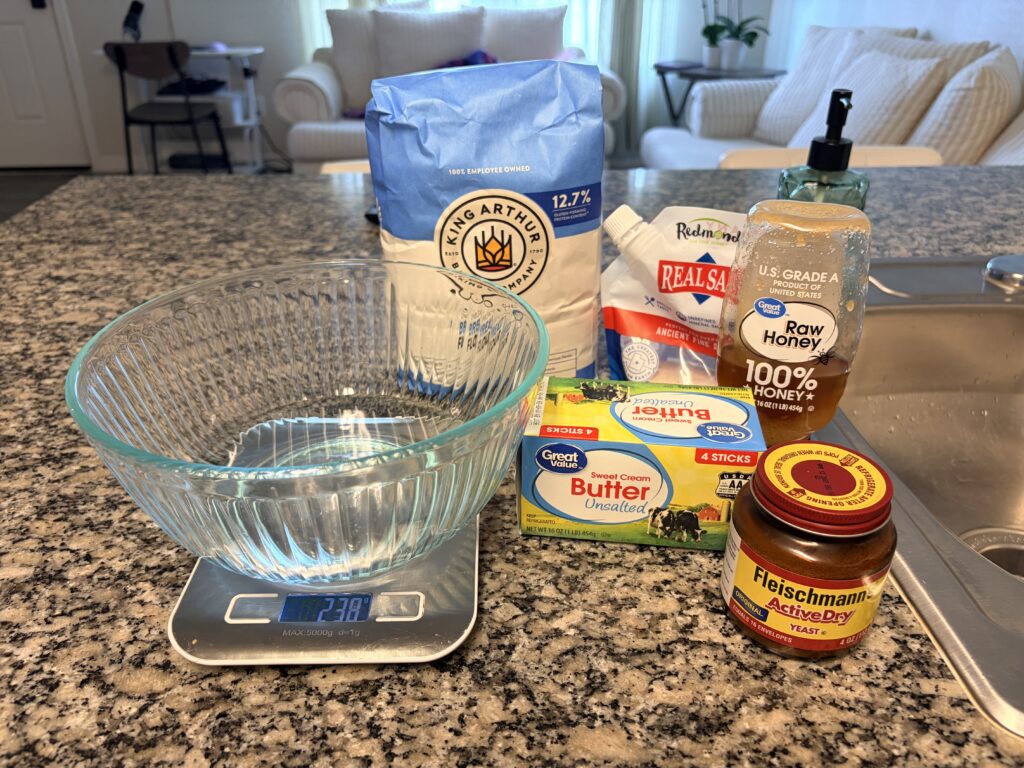
Bread flour is one of the reasons this loaf has such a soft but sturdy texture. If you’re newer to baking, King Arthur Baking has a helpful guide explaining how flour protein can affect your bread and baked goods.
The honey also helps keep the bread soft. It adds a little sweetness, but not too much. Just enough to give the bread a gentle flavor and help the texture stay tender.
Then the butter or oil adds softness too.
Butter gives the bread a little more flavor, while oil keeps it extra tender. Either one works, so I love that this recipe gives you some flexibility depending on what you have.
The rise time matters too.
Letting the dough rise properly gives the bread a lighter texture. If you rush the rise, the loaf can turn out more dense. But when the dough has time to get puffy and soft, it bakes into a much lighter loaf.
And the last thing is flour.
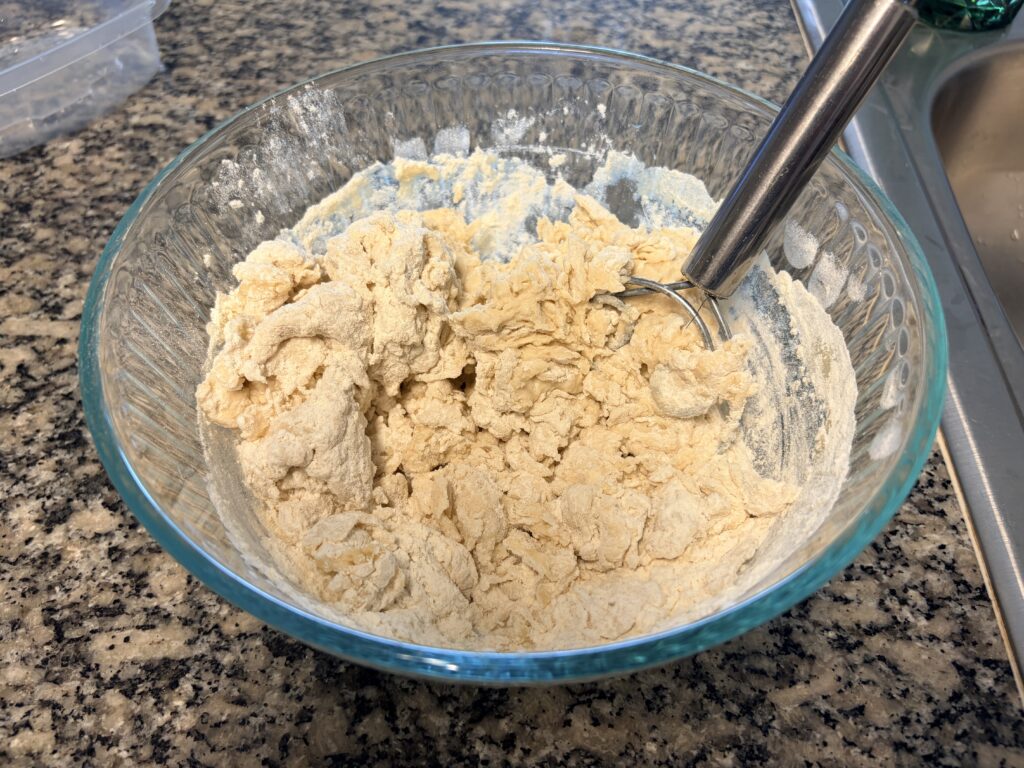
It can be tempting to keep adding flour when dough feels a little sticky, but slightly tacky dough is actually what helps make soft homemade sandwich bread. Too much flour can make the loaf dry or dense.
So when you are kneading, add flour slowly and only when you need it.
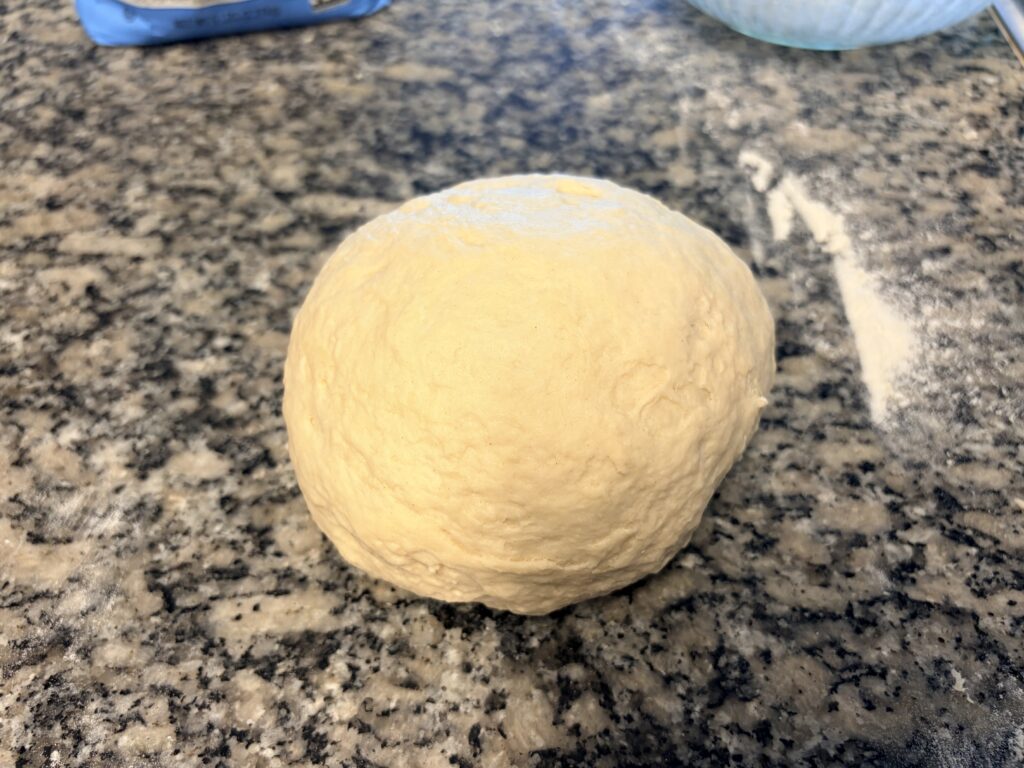
The dough should feel smooth and elastic, but still just a little soft to the touch.
That is what gives you a loaf that slices beautifully, stays tender, and works for all the everyday things — sandwiches, toast, grilled cheese, and easy family lunches.
What Can You Use This Bread For?
This is one of the reasons I love having a simple sandwich bread recipe on hand.
It is not one of those homemade recipes you make once and then wonder what to do with.
This bread is useful.
It works for the everyday meals your family is probably already eating, which is exactly what makes it feel worth the effort.
You can use it for simple lunch sandwiches, peanut butter and jelly, turkey and cheese, egg salad, or whatever your family usually reaches for during the week.
It also makes the best toast in the morning.
A warm slice with butter, peanut butter, jam, or honey feels simple, but so comforting.
And because the bread is soft and sturdy, it works really well for grilled cheese too. The outside gets golden and crisp, while the inside stays soft enough for that cozy homemade sandwich feel.
You can also use this bread for homemade Uncrustables, which is such a helpful option if you like having easy lunches or snacks ready to go.
Just make the sandwiches, seal them, freeze them, and pull them out when you need something quick.
It is also great for lunchbox sandwiches because it is soft enough for kids, but still holds together well.
And if you have a few slices that are getting close to the end, turn them into French toast.
That is one of my favorite ways to use up homemade bread because nothing goes to waste, and it turns into an easy breakfast that feels a little special.
That is what I love about this soft homemade sandwich bread.
One loaf can become breakfast, lunch, snacks, and even a simple dinner.
It is not just a bread recipe.
It is a small homemaking rhythm that helps make feeding your family feel a little easier.
Ingredients
Equipment
Method
- In a large bowl, combine:
- Warm water
- Honey
- Yeast
- Let sit for 5–10 minutes until foamy.
- Add:
- Butter or oil
- Salt
- Mix until a shaggy dough forms.
- Knead
- Turn onto a lightly floured surface and knead for 8–10 minutes.
- The dough should be:
- Smooth
- Elastic
- Slightly tacky
- If very sticky, add flour 1 tablespoon at a time.
- First Rise
- Place dough in a lightly greased bowl.
- Shape the Loaf
- Gently press the dough into a rectangle.
- Roll it up tightly from the short end and pinch the seam closed.
- Place into a greased 9×5 loaf pan.
- Cover loosely and let rise for 30–45 minutes.
- The dough should rise about 1 inch above the rim of the pan.
- Bake
- The loaf is done when:
- Golden brown on top
- Sounds hollow when tapped
- Cool
- Remove from the pan immediately.
- Cool on a wire rack for at least 1 hour before slicing.
Tips for the Best Soft Homemade Sandwich Bread
Homemade bread can feel intimidating at first, but most of the time, it comes down to a few simple things.
You do not need to be a professional baker.
You do not need a perfect kitchen.
You just need to understand what helps the dough stay soft, rise well, and bake into a loaf that actually works for everyday sandwiches and toast.
These are the little tips that make this soft homemade sandwich bread easier and more dependable.
Use Bread Flour for the Softest Loaf
Bread flour helps give this loaf the best texture.
It creates a stronger dough, which helps the bread rise well and hold its shape. That is what gives you a soft, fluffy sandwich-style loaf instead of bread that feels too crumbly or flat.
All-purpose flour can work in a pinch, but bread flour gives the best result for this recipe.
So if you want that soft homemade sandwich bread texture, bread flour is worth using.
Don’t Add Too Much Flour
This is probably one of the most important tips.
When dough feels a little sticky, it is easy to keep adding more flour. But too much flour can make homemade bread dry, heavy, or dense.
For this recipe, the dough should be slightly tacky.
Not so sticky that it is impossible to work with, but soft enough that it still has moisture in it.
If you need to add more flour while kneading, add it slowly — about one tablespoon at a time.
A soft dough usually means a softer loaf.
Let the Dough Rise Until Doubled
Rise time matters.
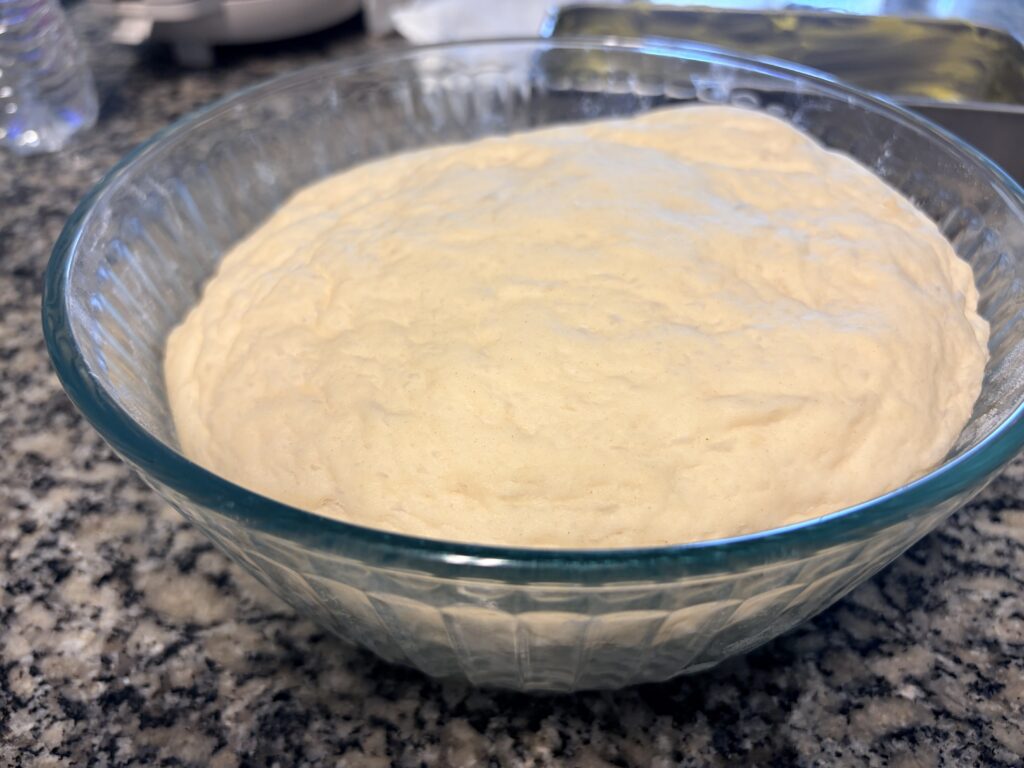
The dough needs time to become light, puffy, and full of air before it goes into the oven. If you rush this step, the bread can turn out dense instead of soft and fluffy.
For the first rise, let the dough rise until it has doubled in size.
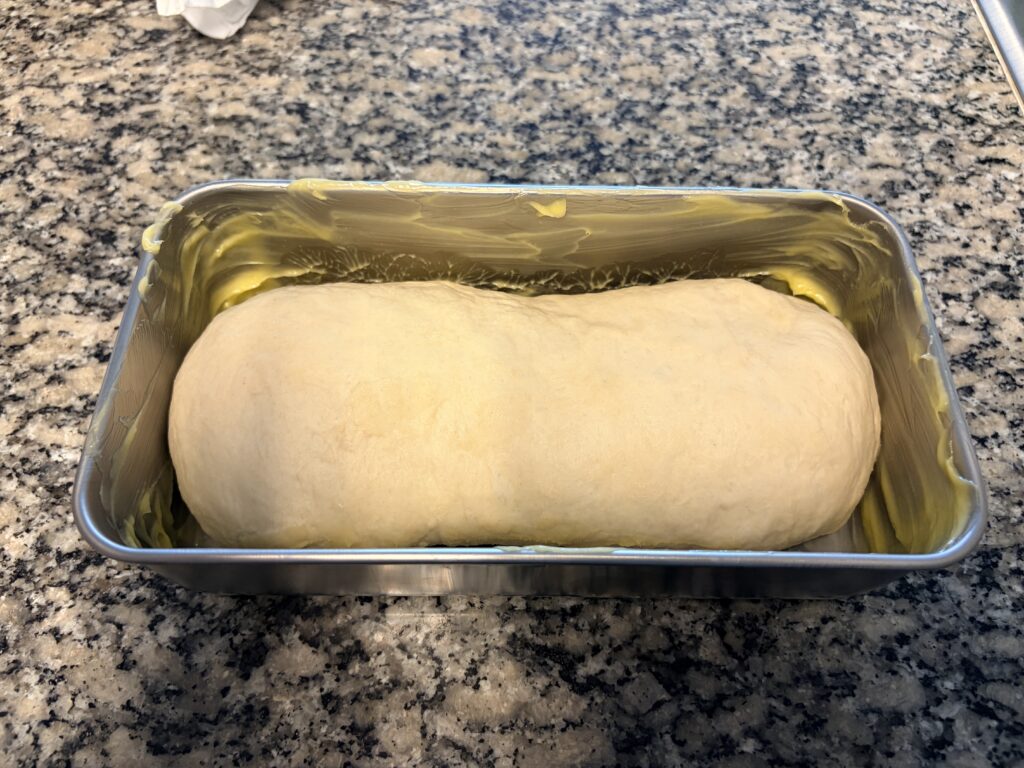
For the second rise, let it rise in the loaf pan until it is about one inch above the rim of the pan.
This helps create that classic sandwich bread shape and soft texture.
Let the Bread Cool Before Slicing
This one is hard, because fresh bread smells so good.
But letting the bread cool before slicing really does matter.
When bread first comes out of the oven, the inside is still finishing its texture. If you slice it too soon, the bread can turn gummy or squish down instead of slicing cleanly.
Let the loaf cool on a wire rack for at least one hour before slicing.
It takes patience, but it makes such a difference.
Use an Oven Light for a Warm Rise
If your kitchen is cool, your dough may rise more slowly.
One simple trick is to place the covered dough inside the oven with the oven light on.
Do not turn the oven on.
Just the light creates a slightly warmer spot that can help the dough rise more comfortably.
This is especially helpful in colder months or if your kitchen tends to stay cool.
A warm, draft-free spot can make the whole bread-making process feel easier and more predictable.
How to Store Homemade Sandwich Bread
One of the best things about this recipe is that one loaf can stretch through several meals.
That is what makes it so helpful for busy weeks.
You can make it once, slice it, and use it for toast, sandwiches, grilled cheese, or easy lunches without having to start from scratch every day.
Room Temperature
Once the bread has cooled completely, store it in a bread bag or airtight container at room temperature.
It should stay soft for several days, especially if it is wrapped well.
I like to make sure the loaf is fully cooled before storing it so extra steam does not get trapped inside the bag. That helps keep the texture soft without making the bread too moist.
Freezing the Loaf
You can also freeze the loaf if you do not think you will use it all within a few days.
Let the bread cool completely first, then slice it before freezing. This makes it much easier to use later because you can pull out only what you need instead of trying to thaw the whole loaf at once.
Place the sliced bread in a freezer-safe bag, press out as much extra air as you can, and freeze.
When you are ready to use it, you can let slices thaw at room temperature or pop them straight into the toaster.
Freezing Individual Slices
For an even easier option, freeze individual slices with small pieces of parchment paper between them.
This keeps the slices from sticking together and makes it simple to grab just one or two at a time.
This is such a helpful little system for busy moms because you can make one loaf and stretch it through the week.
You do the work once, and then you have homemade bread ready for quick breakfasts, lunchbox sandwiches, after-school toast, or easy grilled cheese nights.
It is one of those small routines that makes homemade food feel more realistic for everyday life.
FAQ
Can I use all-purpose flour instead of bread flour?
Yes, you can use all-purpose flour if that is what you have on hand.
The bread may still turn out good, but the texture might be slightly less fluffy than it would be with bread flour. Bread flour gives this loaf more structure and helps create that soft, sandwich-style texture.
So all-purpose flour works, but bread flour gives the best result for this soft homemade sandwich bread.
Can I use oil instead of butter?
Yes, both oil and butter work in this recipe.
Butter gives the bread a little more flavor and richness, while oil helps keep the loaf soft and tender.
I like that you can use whichever one fits your kitchen that day. Homemade bread does not need to feel complicated, and this is one of those simple swaps that still works either way.
Why is my bread dense?
If your bread turns out dense, there are usually a few possible reasons.
The dough may not have risen long enough, too much flour may have been added, or the yeast may not have activated properly.
When you activate the yeast, the mixture should get foamy after sitting for 5–10 minutes. If it does not foam, the yeast may be old, or the water may have been too hot or too cold.
Also, be careful not to add too much flour while kneading. The dough should be smooth and elastic, but still slightly tacky. A soft dough usually leads to a softer loaf.
Can I freeze homemade sandwich bread?
Yes, homemade sandwich bread freezes really well.
Let the loaf cool completely first, then slice it before freezing. Place the slices in a freezer-safe bag and press out as much air as possible.
This makes it easy to pull out a few slices at a time for toast, sandwiches, or quick lunches during the week.
Can I make this bread without a stand mixer?
Yes, you do not need a stand mixer for this recipe.
This bread can be kneaded by hand for about 8–10 minutes. The dough should become smooth, elastic, and slightly tacky when it is ready.
A stand mixer can make the process easier, but it is not required.
This is still a very doable bread recipe even if you are making it the old-fashioned way on the counter.
Looking for another simple homemade bread recipe? You might also love my bread machine whole wheat bread recipe. It’s another easy from-scratch staple that makes homemade bread feel doable for busy weeks.
A Simple Homemade Staple for Real Life
This is the kind of recipe that reminds me homemade does not have to be complicated to matter.
It does not have to be perfect.
It does not have to look like an old-fashioned bakery or take over your whole day.
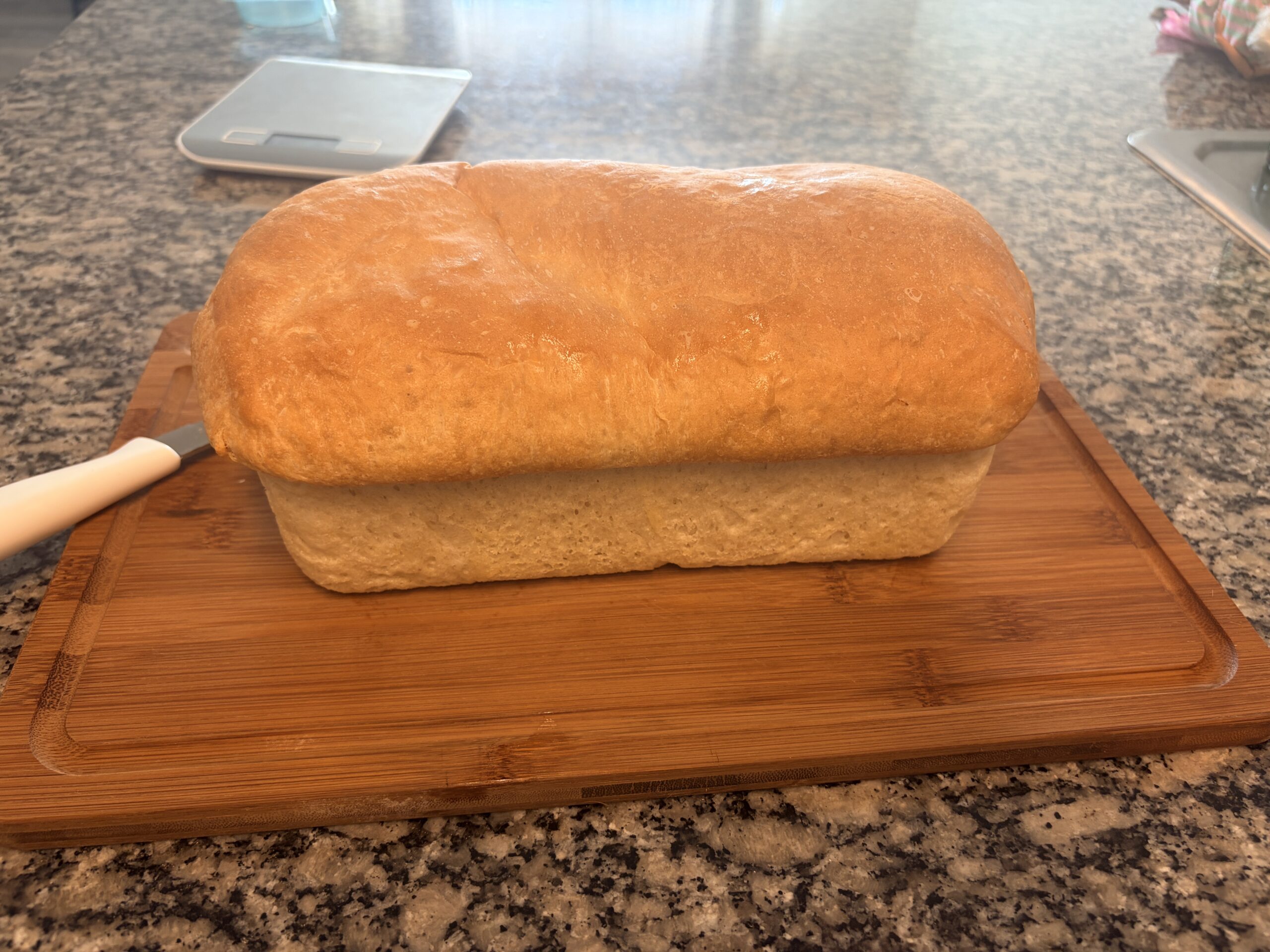
Sometimes, homemade just looks like one soft loaf of bread cooling on the counter.
Something simple you can slice for sandwiches, toast for breakfast, or turn into grilled cheese when you need an easy dinner.
That feels realistic to me.
Because the goal is not to make every single thing from scratch all the time. The goal is to find small homemade rhythms that actually support your real life.
And this bread does that.
It gives you something useful.
Something cozy.
Something your family can reach for throughout the week.
This soft homemade sandwich bread is simple, cozy, and practical — the kind of recipe that supports real family life without making your day harder. And that’s what The Simplest Nest is all about: small homemade rhythms, simple meals, and little ways to nourish our families with more peace and less pressure.